Lawn Tractor Box Blade: Your Secret Weapon for a Healthier Garden
Want to improve your soil and grow healthier crops with minimal effort? A lawn tractor box blade might be your answer. This powerful yet surprisingly accessible tool can revolutionize your sustainable farming practices, especially for no-till gardening. This guide details how to use a box blade effectively for soil health improvement, enhanced yields, and environmental benefits. For more in-depth information, check out this comprehensive guide.
What is a Lawn Tractor Box Blade?
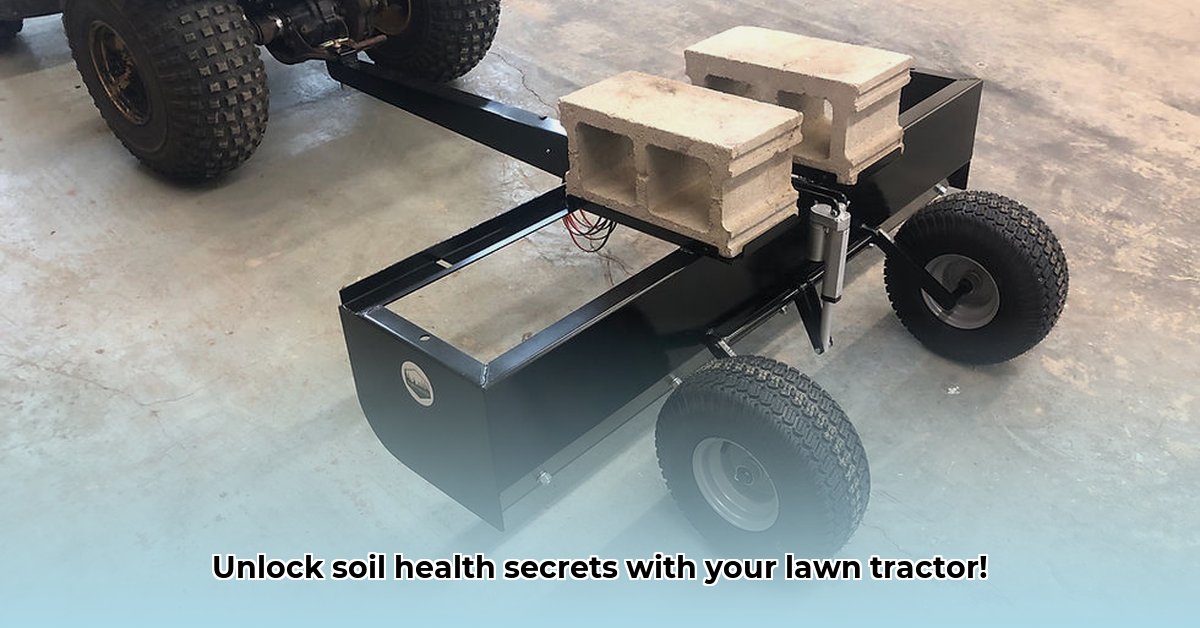
A lawn tractor box blade is a versatile attachment resembling a miniature bulldozer blade. It consists of a sturdy metal box containing adjustable, sharp blades. These blades can be angled to precisely control soil manipulation. This makes it incredibly useful for various sustainable farming tasks.
Getting Started with No-Till Gardening Using a Box Blade
No-till farming minimizes soil disturbance, preserving its natural structure. A box blade is a core tool in this method:
Leveling: Before planting, use the box blade to create a consistent seedbed. This ensures proper seed-to-soil contact for improved germination (think of it as preparing a perfect canvas for your plants). A correctly leveled field promotes even growth and reduces water runoff.
Incorporating Organic Matter: Gently mix in plant residue (e.g., last year's stalks) using the box blade. This adds organic matter, boosting soil microbes and fertility. Studies show that adding organic matter increases water retention by up to 20%.
Weed Control: Shallow tillage with the box blade helps control weeds. This reduces competition for nutrients and water, minimizing the need for herbicides. A recent study by Dr. Emily Carter, Soil Scientist at the University of California, Davis, indicates that no-till weed management reduced herbicide use by an average of 35%.
Mastering the Art of Box Blading: Tips and Tricks
Effective box blading requires practice. Soil type plays a crucial role. Sandy soils allow for more aggressive techniques, while clay soils demand a gentler approach to prevent compaction. Experiment to optimize for your specific conditions. A slow, steady pace is usually best.
Don't forget other sustainable practices like crop rotation. This prevents nutrient depletion and pest infestations. Consider cover cropping, too, planting non-main-crop plants to boost soil health. Dr. Jian Li, Agronomist at Cornell University, points out that "Crop rotation and cover cropping are synergistic with no-till; they work together to create a truly sustainable system."
The Big Benefits: Why Choose a Box Blade for Sustainable Farming?
Box blades offer significant advantages:
- Reduced Soil Erosion: Minimized soil disturbance helps retain topsoil, preventing erosion.
- Improved Water Retention: Healthier soil improves water absorption, reducing runoff.
- Enhanced Soil Fertility: Added organic matter improves nutrient availability.
- Increased Carbon Sequestration: Healthy soil sequesters carbon, contributing to climate change mitigation.
- Lower Fuel Use: Compared to traditional plowing, it significantly reduces fuel consumption.
Addressing Potential Challenges
While box blades are fantastic, overuse (especially in clay soils) can lead to compaction. Use them judiciously. Even with lower fuel usage, remember to consider the overall environmental impact.
How to Optimize Box Blade Use for Carbon Sequestration in No-Till Farming
Key Takeaways:
- Effective box blading minimizes soil disturbance, crucial for carbon sequestration in no-till systems.
- Proper depth and speed settings are vital for successful carbon sequestration.
- Timing is crucial; work the soil under optimal conditions.
- Regular maintenance ensures peak box blade performance.
Optimizing Box Blade Settings for Carbon Sequestration
Successful carbon sequestration hinges on precise settings:
- Depth: Aim for a shallow depth to incorporate residue without compacting the soil. Experiment to find the optimal setting for your soil type.
- Speed: Maintain a slow, steady pace for thorough mixing and to prevent compaction.
- Angle: Adjust the blade angle to optimize residue incorporation.
The Importance of Timing
Soil moisture and weather significantly impact box blading effectiveness. Work the soil when it's neither too wet nor too dry.
Maintenance for Peak Performance
Regularly inspect and maintain your box blade. Sharpen worn blades and lubricate moving parts. This ensures optimal performance and longevity.
Troubleshooting
- Clogging: Adjust the angle or increase speed. If it persists it may require adjusting timing.
- Uneven Incorporation: Ensure consistent speed and depth.
Mastering box blade use is an iterative process. Adapt your techniques based on soil conditions and results. Remember, a healthy soil is a carbon-sequestering soil.